InstaFeet Review 2026: Is It Still Legit? What Happened & Where to Go
Disclosure: This review is published by FeetFinder. The platform acquired InstaFeet.com, which now redirects to FeetFinder, so we have a commercial interest in that outcome. We've kept the facts below verifiable and flagged what's historical vs. current. Last updated 6 August 2026.
Something is off with InstaFeet in 2026: stalled pages, dead sign-up buttons, and unexpected redirects.
If you have searched “InstaFeet” recently, you have probably ended up confused. The name still comes up everywhere, old reviews describe a full platform, and yet the website itself now just redirects you.
Once an early player in the feet-pic marketplace, it's now hard to pin down, and people keep asking the same thing: is it still active, still worth it?
This guide clears it up honestly: what InstaFeet actually was, whether it is safe and real, how it works now, and, most importantly, where it sends you once you click through.
We will keep this straight and useful, no hype. By the end, you will know exactly what you are looking at and what to do next.
And if your goal is simply to sell feet pics and start earning, you can do that on FeetFinder right now.
Quick Answer
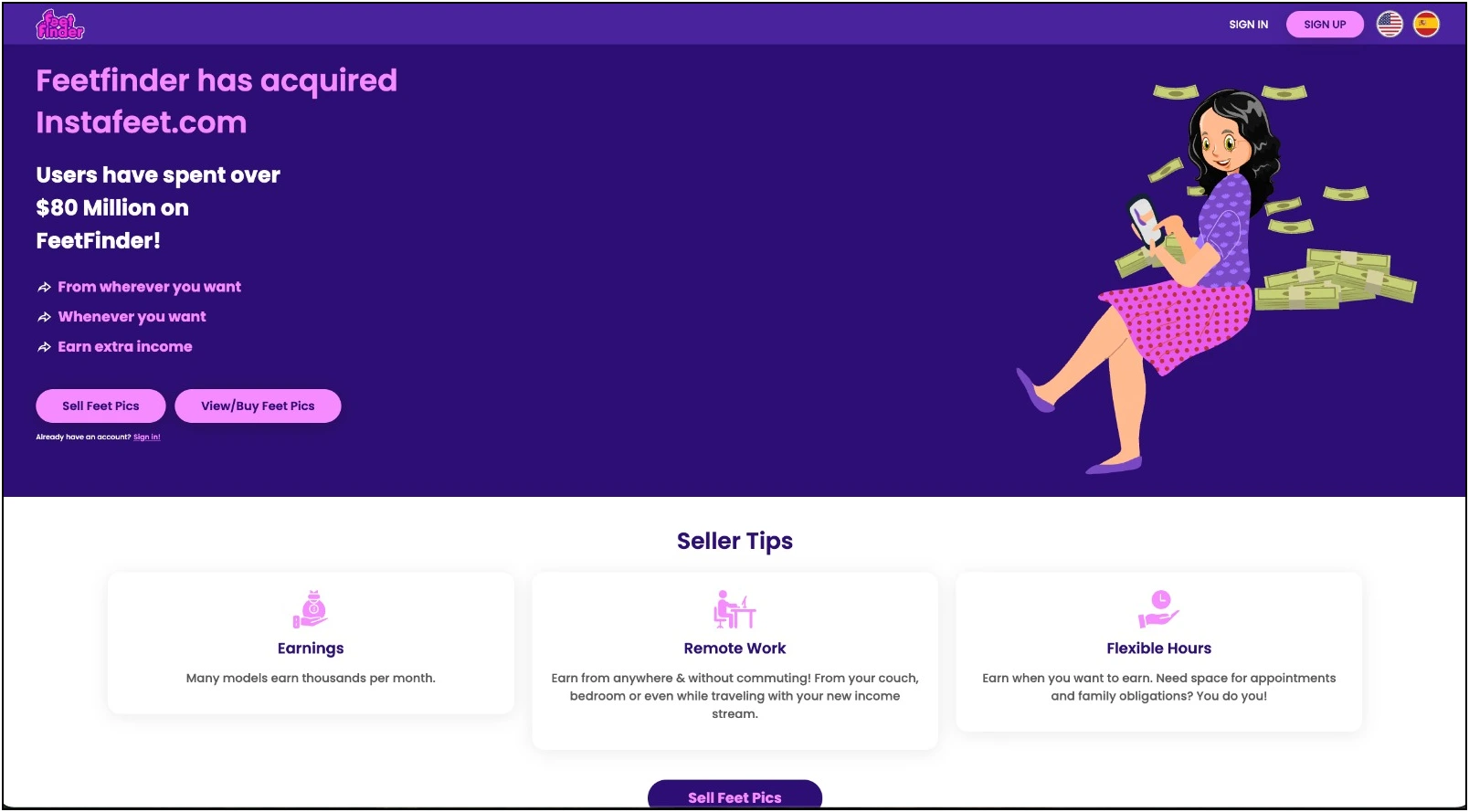
In 2026, InstaFeet is no longer an active, independent marketplace. InstaFeet.com now shows a notice that FeetFinder has acquired it, and every button redirects you to FeetFinder's sign-up or login page.
If you try to “join InstaFeet” today, you are actually opening a FeetFinder account, and your content and payouts are handled entirely on FeetFinder.
What Is InstaFeet?
InstaFeet was a private, feet-only marketplace — a place to buy and sell photos of feet, and later short videos. The InstaFeet.com domain was registered back in 2012, but the marketplace itself came later: it launched around 2017–2018 and, per his LinkedIn and multiple reviews, was founded by Fabian Lejsek, based in Santa Clara, California.
It caught on in 2019–2020, just as "selling feet pics" was becoming a widely talked-about side hustle. The "private" part was central to how it worked — it was strictly 18 and over, nothing sat on a public feed, and only paying subscribers could unlock a seller's content (though buyers could also buy individual photos or custom requests, and sellers could stay completely anonymous).
The Full InstaFeet Story: From Launch to FeetFinder
InstaFeet's story is short but eventful, and understanding it is the fastest way to make sense of the confusing situation you run into today. Here's the whole arc, from the platform's early days to the point where its front door opened onto FeetFinder.
How InstaFeet started
InstaFeet launched around 2017–2018 as a deliberately narrow idea: a private marketplace built around one thing — feet content. While mainstream creator platforms were broad and crowded, InstaFeet carved out a niche and kept the concept simple.
Sellers made a profile, verified their identity, and set a monthly subscription price; buyers paid to unlock that seller's gallery. There were no public feeds and no open browsing of paid content — privacy was the selling point, and for a niche where discretion matters, that focus was the whole appeal.
In its earliest years InstaFeet was small and relatively quiet. It had the feel of a lean, founder-run project rather than a big venture-backed company, and its social presence was minimal.
That low profile would matter later, because it left the platform without the support infrastructure that a sudden surge in users would demand.
The rise: when “selling feet pics” went mainstream (2019–2020)
Around 2019 and into 2020, InstaFeet caught a wave. “Selling feet pics” went from a punchline to a genuinely discussed side hustle, propelled by viral posts, screenshots of eye-popping monthly earnings, and a pandemic-era hunt for flexible, work-from-home income.
Suddenly a platform that had quietly specialized in exactly this was in the right place at the right time.
The pitch was hard to resist on paper: work from anywhere, on your own schedule, stay anonymous, and earn from content you fully control. Subscriptions gave sellers recurring income, custom requests added upside, and the private model reassured people worried about their images ending up in public.
For a while, InstaFeet rode that momentum and became one of the names people mentioned first when the topic came up.
How InstaFeet worked at its peak
At its height, the InstaFeet flow was straightforward. You signed up as a seller, entered your details, and uploaded a government ID to prove you were 18 or older.
You posted a small starter set of photos — usually around five — and then waited for a manual review before your profile went live. Once approved, you set your subscription price, uploaded content, and could offer individual photos or custom shots on top.
Buyers subscribed to unlock a seller's gallery, bought one-off images, or messaged for customs. Nothing a seller posted was public; only paying subscribers could see it.
That verification-plus-privacy combination was InstaFeet's core promise, and when it worked, it worked well.
The cracks: reliability and trust problems (2021–2022)
The trouble was that InstaFeet's infrastructure never really scaled to match its moment. Through 2021 and 2022, complaints piled up.
The manual approval process — the same gate that kept the platform verified — became a bottleneck, with sellers reporting waits of anywhere from several days to multiple weeks, often with no clear status and no way to reach support.
Other issues compounded it: a slow, sometimes buggy website; login failures; fake or spammy profiles; and unease about handing over an ID and payment details to a company that was hard to contact.
On Trustpilot, the platform sat at a poor rating for much of this period, with reviews clustering around the same handful of frustrations — approval limbo, access problems, and doubts about data handling.
Many of the glowing reviews, meanwhile, were transparently sellers marketing their own profiles, which only deepened the skepticism.
None of this meant InstaFeet was a scam — people genuinely made accounts, gained subscribers, and got paid. But “real and legitimate” isn't the same as “reliable,” and by 2022 the gap between the two had become the platform's defining problem.
Going dark (2022–2023)
Late 2022 into 2023, things got murkier. The site went down for stretches, and no clear public statement explained what was happening — closure, maintenance, a merger, or something else.
For sellers who'd built an audience there, the silence was the worst part: an unreliable platform is frustrating, but an unreachable one that's simply offline leaves you with nowhere to turn.
The acquisition: how FeetFinder acquired InstaFeet (2023)
That uncertainty was resolved when FeetFinder acquired InstaFeet in 2023. Rather than run two overlapping marketplaces, the acquisition folded InstaFeet's audience into FeetFinder's larger, better-supported platform.
InstaFeet's domain stopped serving an independent product and instead began pointing visitors to FeetFinder — which is why, today, InstaFeet.com shows a notice that “FeetFinder has acquired InstaFeet.com” and routes every button into FeetFinder's sign-up or login flow.
From a seller's point of view, the logic is simple: the buyers, the payment processing, the verification, and the support that InstaFeet struggled to provide all now live on FeetFinder.
The InstaFeet name persists — including on look-alike apps in the Google Play Store — but the working marketplace behind it is FeetFinder's website.
Where InstaFeet stands in 2026
Which brings us to today. There is no independent InstaFeet marketplace to log into.
The domain is an entrence; FeetFinder runs web-only on mobile (there's no official app), and the payouts and tools are FeetFinder's.
The one thing that hasn't faded is the InstaFeet name's search footprint — the domain still pulls significant organic traffic and backlinks (more on that just below), which is exactly why so many old guides, reviews, and how-tos keep surfacing for a platform that no longer independently exists.
If you've read this far, the confusing parts should now click into place: the “why won't it load,” the redirects, the mismatched old reviews. InstaFeet didn't vanish — it was absorbed.
The rest of this review covers what that means in practice: whether it's safe, what it costs, what people say in reviews, and how to actually start earning today.
What InstaFeet.com Does in 2026 (Current)
As of 2026, InstaFeet.com no longer operates as an independent marketplace. The domain loads a page that states "FeetFinder has acquired InstaFeet.com," and all buttons on that page redirect to FeetFinder's sign-up or login flow.
What looks like a homepage is really just a gateway, and the room it opens onto is FeetFinder. That also explains why the page feels so bare if you were expecting the platform people used years ago.
The tools, the buyers, and the payouts are not there — they moved. Any attempt to join or log in through InstaFeet simply takes you to FeetFinder, which is why people report glitchy loops, being asked for a password twice, or not being able to register on InstaFeet itself.
Why does the name still show up everywhere? Even as a redirect, the InstaFeet domain still carries real search weight.
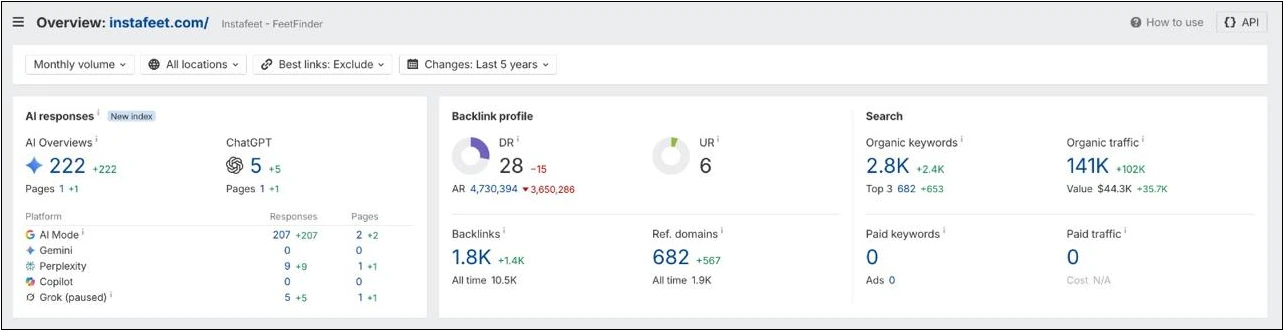
As of 5 August 2026, third-party SEO data (Ahrefs) shows the domain still commanding:
-
141K organic visits per month
-
2.8K ranking keywords
-
682 referring domains
-
1.8K backlinks
-
222 mentions in Google AI Overviews, plus visibility in AI Mode (207), Perplexity (9), ChatGPT (5), and Grok (5) — across 6 cited pages in AI search
In other words, the marketplace is gone, but the domain's legacy footprint is very much alive.
Is InstaFeet Legit, Safe, and Real?
InstaFeet was real and legitimate, not a phishing scam. It became unreliable before it wound down.
The question that matters now is whether the place it sends you is safe.
Is it real? Yes. InstaFeet was a legit platform where people made accounts, gained subscribers, and got paid, usually through PayPal.
Was it flawless? No. It processed real payouts, so it was legitimate in the basic sense — people did earn money there.
But public sentiment was mixed. Many users raised red flags such as slow or stalled approvals, unclear data handling, identity-theft worries, broken links, and no clear way to contact the company, which made the platform feel unsafe and unreliable for new creators.
On Trustpilot, InstaFeet currently sits at 3.2 out of 5 from 31 reviews — a middling, mixed score, though up from the roughly 2/5 it carried during its rocky 2021–2022 stretch. The profile is unclaimed, and the recurring complaints are trouble logging in, slow-loading pages, and fake profiles.
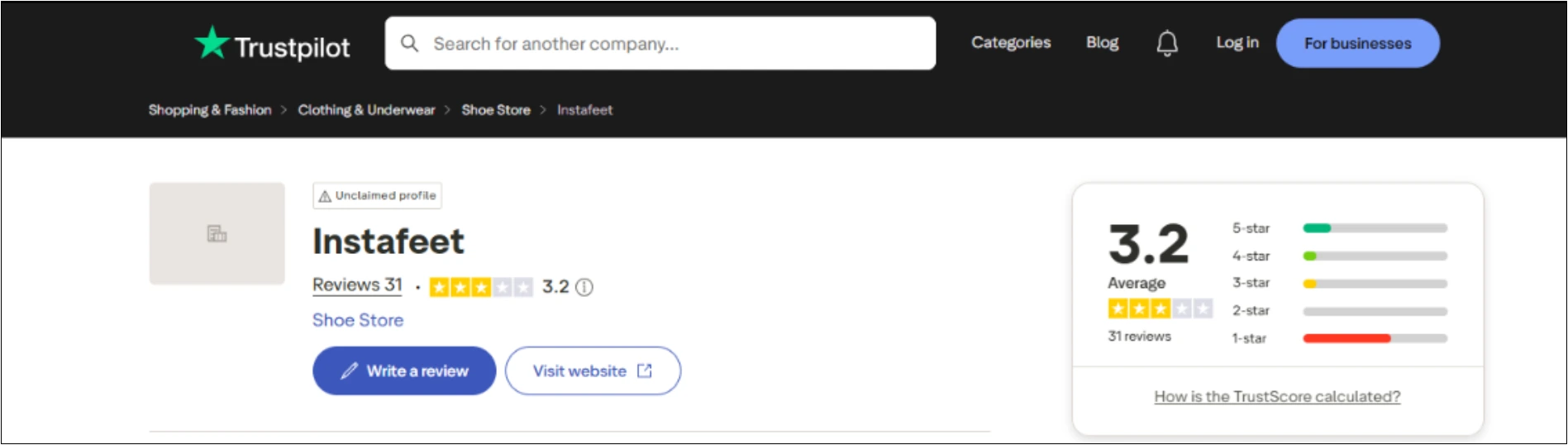
InstaFeet's Trustpilot profile: 3.2/5 from 31 reviews, listed as an unclaimed profile under the Shoe Store category.
So is it safe now? Since InstaFeet no longer handles your money or your data, the real question is whether the site it redirects you to actually hold up. This is where FeetFinder comes in:
-
A real track record. FeetFinder has run since 2019, which is a long time to stay active and maintained in this niche.
-
Secure, established payment processors. Transactions and payouts run through approved third-party providers, Segpay and Paxum, so your financial details stay protected.
-
Straightforward currency. All transactions settle in USD.
-
Verified sellers, verified buyers. Sellers submit a government ID and a selfie (18+) before they can list; buyers link a card on file — so both sides are checked before any transaction.
-
Reliable weekly payouts. Payouts are processed weekly through trusted processors — Segpay, Paxum, and the newer Masspay.
-
A platform people actually use. Millions of verified buyers and sellers use FeetFinder, which states that users have spent over $110 million on the platform.
Simply put, the things that actually keep a seller safe are seller ID verification, PCI-compliant payment handling, anti-leak watermarking, and payouts that reliably arrive.
How FeetFinder protects you. Per FeetFinder, every creator's ID and age are verified, payments run through PCI-compliant systems, and personal details are never revealed between buyers and sellers.
Content is moderated around the clock, uploads get anti-leak watermarking, and your ID and payout details are used only for verification and payouts — never sold to third parties. Charges even appear discreetly on card statements as “SEGPAY.COM*FeetFinder.”
So judge FeetFinder on what it is, not on InstaFeet's faded reputation. And if safety is your first concern, it's worth reading our guide on how to sell feet pics without getting scammed before you begin.
InstaFeet Reviews: What Users Actually Said
If you dig through InstaFeet reviews from its active years, a consistent picture emerges — and it's more nuanced than either “scam” or “goldmine.”
The most common complaint, by far, was the approval process. Prospective sellers described handing over an ID and PayPal details, then waiting days or weeks in a verification queue with no updates and no way to follow up.
Some never heard back at all. For a step meant to build trust, it did the opposite: several reviewers said the long, silent wait after submitting sensitive documents was exactly what made them nervous.
Close behind were technical gripes — a slow, occasionally broken site, login problems, and accounts that seemed to reset or misbehave after updates — along with reports of fake or spammy profiles cluttering the platform.
On the other side, some reviewers insisted the platform worked fine once you were actually approved and inside, and that a chunk of the negative reviews came from applicants who never made the cut.
That's plausible, but it's also worth knowing that many of the most enthusiastic reviews were sellers openly promoting their own InstaFeet profiles, so they can't be taken entirely at face value.
The numbers capture that split. Its Trustpilot score has recovered to a middling 3.2 from roughly 2/5 of its worst stretch, while a third-party InstaFeet–FeetFinder app in the stores shows 4.1 on Google Play, albeit from a smaller sample.
Read individually, the reviews are a useful warning about what a thinly supported platform feels like — and a decent argument for choosing one with responsive support and clear terms.
InstaFeet Fees: Is It Really Free to Use?
Short answer: no — not for sellers. Buyers can browse for free, but selling requires a paid seller plan.
Historically, that meant a monthly subscription; today, because the domain redirects to FeetFinder, it means one of FeetFinder's two seller plans (details below).
Before the acquisition (historical): Before InstaFeet was acquired, it ran as a private, subscription-based marketplace — and, notably, sellers joined for free. Buyers were the ones who paid: a seller's photos and videos were paywalled, so viewing them was not free.
To see a seller's content, you subscribed to their profile — a standard subscription ran about $10 a month, with the seller setting the price — or you bought individual photos and customs a la carte.
After the acquisition (currently, via FeetFinder): In 2026, InstaFeet no longer sets its own fees. InstaFeet.com redirects to FeetFinder, so pricing follows FeetFinder's seller plans.
FeetFinder offers two main seller plans:
|
Plan |
Monthly |
Yearly |
Lifetime |
You keep |
|---|---|---|---|---|
|
Basic |
$4.99 |
$14.99 |
$40 |
85% of earnings |
|
Premium |
$14.99 |
$49.99 |
$80 |
90% of earnings |
In short, our Basic vs. Premium plans differ mainly on fees: Basic is the cheapest way in and keeps 85% of what you earn, while Premium costs more up front but lets you keep 90%.
Buyers pay nothing to browse; the plan fee applies to sellers only, and it's separate from the per-sale service fee that determines your 85% / 90% split.
How to Sell Feet Pics in 2026 (Using InstaFeet's Redirect to FeetFinder)
InstaFeet has effectively folded into FeetFinder, so anyone signing up through InstaFeet today ends up selling feet pics on FeetFinder anyway. Here's each step.
-
Create your seller account. Sign up on FeetFinder directly, choose the seller option, and pick a plan: Basic ($4.99/month, $14.99/year, or $40 lifetime, 85% earnings) or Premium ($14.99/month, $49.99/year, or $80 lifetime, 90% earnings). Complete registration before uploading any content.
-
Verify your identity. Submit a valid government ID and a live selfie; approval usually takes a day or two. Make sure your ID is clear, well-lit, and unexpired to avoid delays.
-
Build a complete profile. Choose a memorable username, write a niche-focused bio with a clear call to action, and add a well-lit profile photo (face optional). Fill out all profile tabs to reach 100% completion so buyers can trust and understand your page.
-
Choose a niche. Start with a clear focus such as heels, soles, nail polish, socks, or pedicures, so buyers instantly understand your style. A defined niche makes it easier to stand out in search.
-
Shoot high-quality photos. A modern smartphone is enough for taking quality feet pics if you use soft daylight, a clean lens, varied angles, and a tidy background. Edit lightly, watermark previews, and remove location metadata (EXIF) before uploading.
-
Upload and optimize each listing. You can upload unlimited photos and videos, each up to 1GB or 10 minutes, with a specific title, honest description, and accurate tags. FeetFinder automatically blurs every upload until a buyer purchases it, and you can add a non-blurred preview in your Gallery to entice buyers.
-
Price your content strategically. Most foot pics sell for $5–$25 per photo, with bundles and customs typically $25–$100 or more. If you're unsure how to price feet pics, start on the lower end to build traction, then raise as you gain repeat buyers.
-
Get your first buyer. Post consistently, respond quickly to messages, use honest thumbnails, price competitively, and offer a small intro promo. Learning how to find people who buy foot pics early matters more than having a “perfect” profile.
-
Turn buyers into repeat customers. Reply promptly and professionally, reward loyal buyers with exclusives and fresh bundles, and review your analytics weekly to see what sells.
-
Promote your profile safely. Use on-platform tools plus a feet-pics marketing strategy across off-platform channels (Reddit, X, Instagram, Pinterest) within their rules. Share watermarked previews and a link in your bio, and never include identifying details in your promotional content.
A realistic note on earnings: just how much people make on FeetFinder varies widely. FeetFinder reports casual sellers typically earn $100–$500 a month and consistent creators $500–$2,000 or more — but most new sellers start slow, and income depends far more on your own promotion, consistency, and pricing than on the platform itself.
Treat it as a business channel with costs (the plan fee plus the service fee), not passive income.
How Do You Get Paid on InstaFeet?
Historically (old InstaFeet): When InstaFeet operated on its own, most creators were paid through standard online methods such as PayPal. Earnings accumulated in the account, and users requested withdrawals after hitting a minimum threshold, often facing delays and limited support.
Now (redirects to FeetFinder): Today, InstaFeet's domain redirects to FeetFinder, so payouts follow FeetFinder's system — processed weekly, with a few options by location.
-
US sellers: paid via Segpay — no separate Segpay account needed; it's handled inside FeetFinder.
-
International sellers: paid via Paxum (a Paxum account is required).
-
Masspay: a newer payout option, with payouts released every Tuesday.
You track your sales and request withdrawals directly inside FeetFinder, and payouts go out weekly.
InstaFeet App & Login: FeetFinder Has No Official App
Let's be clear up front: there is no official InstaFeet or FeetFinder app. FeetFinder has stated plainly that it does not have an app at all.
In FeetFinder's own words, the platform was originally going to be an app, but Apple and Google rejected it for being a “fetish app.” If the stores ever allow these apps, FeetFinder says it will be first to build one — but for now there is no app, and you use the site on your mobile browser.
So to sign up, log into a FeetFinder account, upload, or track payouts, just open FeetFinder in your mobile browser — no download required.
So what is the “InstaFeet – FeetFinder app” in the stores?
It is a third-party listing, not an official FeetFinder product. On Google Play, an "InstaFeet – FeetFinder app" shows:
-
Developer: FootPrint Company
-
Downloads: 100K+
-
Age rating: 12+
-
Rating: 4.1 / 5 (22 reviews)
But FeetFinder has no official app — so treat that listing, and any like it, as unofficial, and use the FeetFinder website instead.
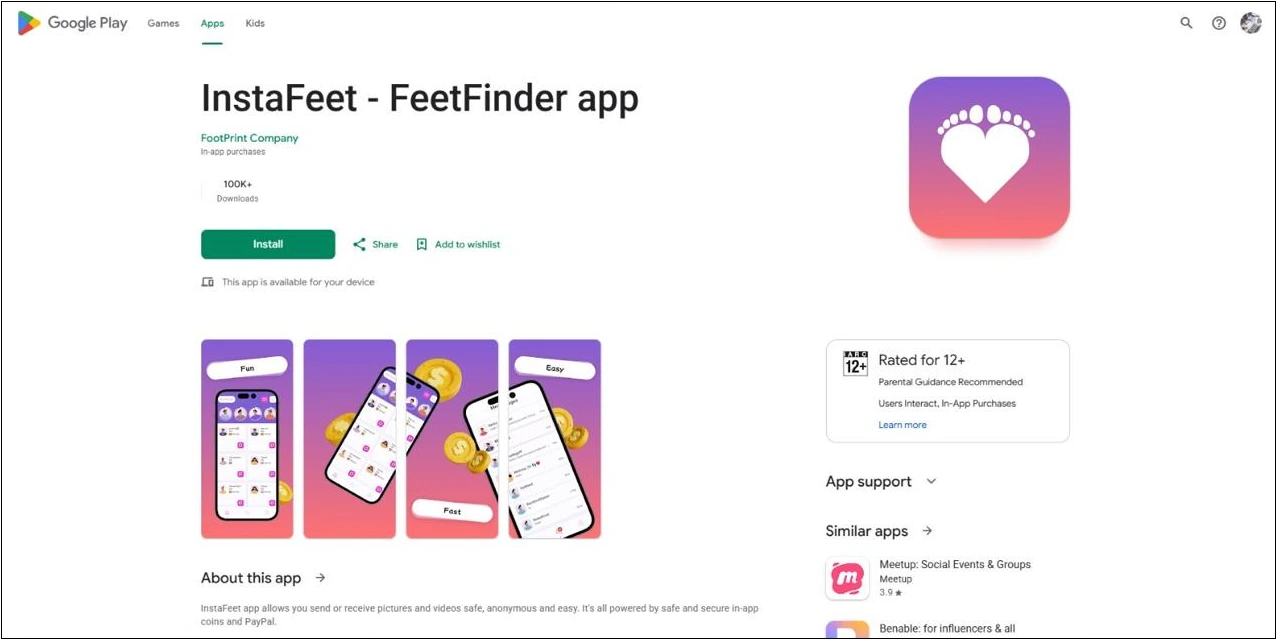
A third-party “InstaFeet – FeetFinder app” on Google Play (FootPrint Company) — not an official FeetFinder app. On mobile, use the website.
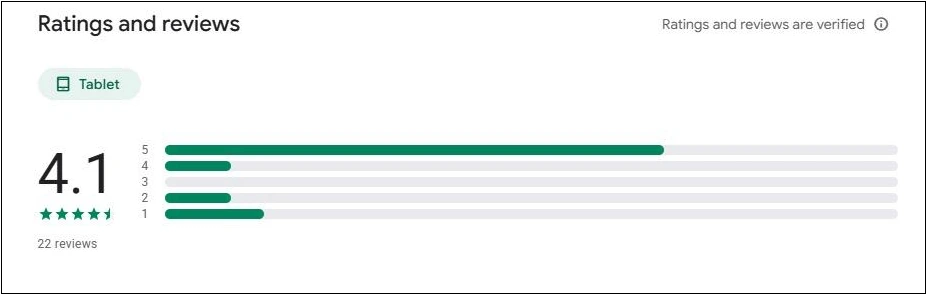
The same third-party listing shows 4.1/5 from 22 reviews on Google Play — note it is not an official FeetFinder product.
That listing's own Google Play data-safety section claims no third-party data sharing, encryption in transit, and a data-deletion option — but for your real account, what matters is FeetFinder's own privacy practices, not a third-party app's.
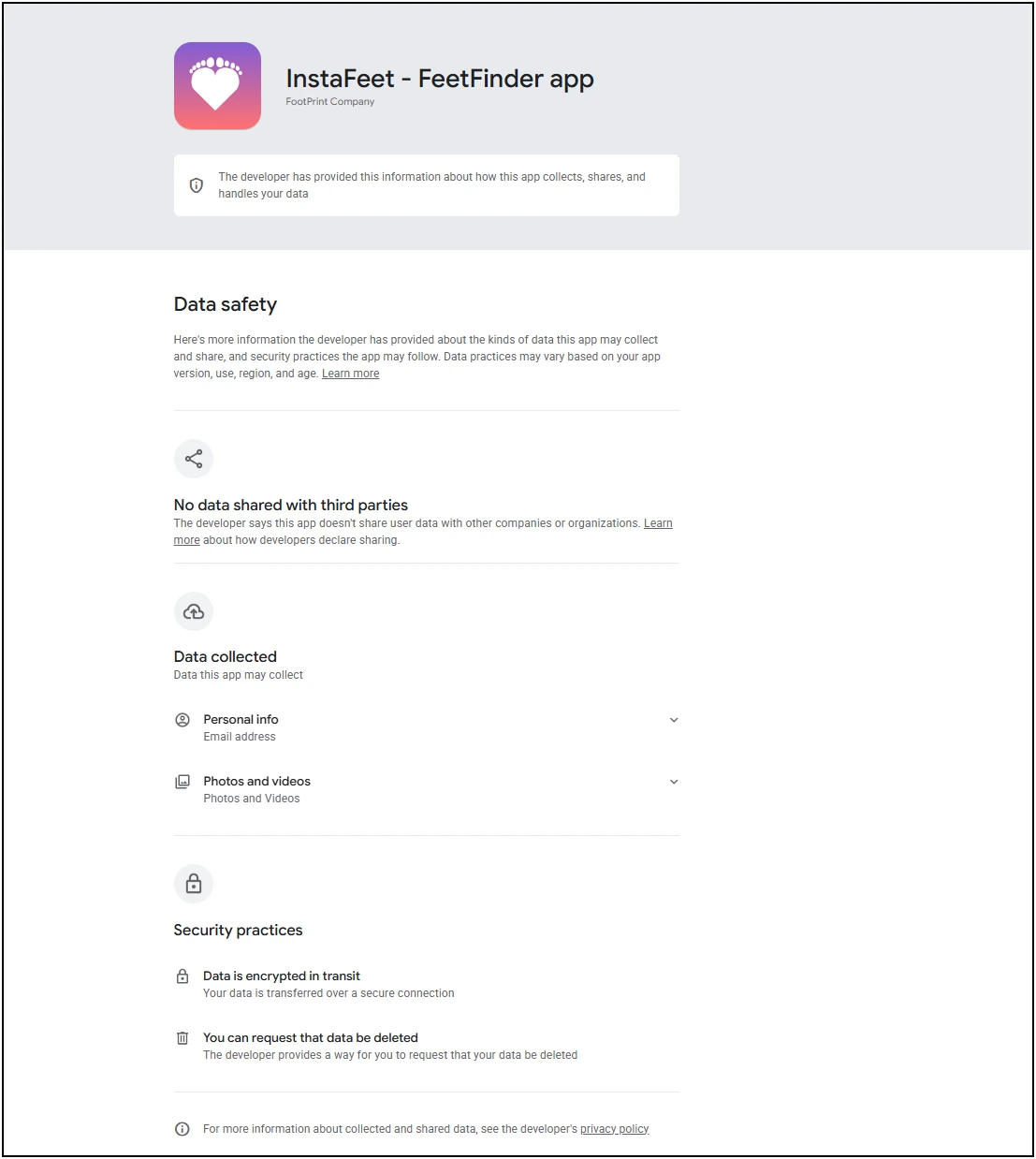
The third-party app's Google Play data-safety disclosure. For your actual account, FeetFinder's official privacy practices apply.
Many people still search for an “InstaFeet app,” an “InstaFeet login,” or how to “join InstaFeet,” expecting the old standalone account system. Since InstaFeet now operates as part of FeetFinder, those live on the FeetFinder website instead.
One caution: look-alike apps using the “InstaFeet” or “FeetFinder” name have appeared in app stores, and reviews of them frequently mention hidden fees, fake buyer accounts, and trouble withdrawing earnings. The safest route is always the official FeetFinder website.
The Bottom Line
InstaFeet was a hit. Between roughly 2019 and 2022 it was a real, working marketplace where creators built subscribers and got paid — but years of downtime, slow verification, and thin support wore it down.
Today the site no longer runs as its own platform: visit InstaFeet.com and every button points to FeetFinder. So if you landed here trying to “join InstaFeet,” the honest answer is that there's nothing left to join.
The marketplace, the buyers, and the payouts have moved.
That's not a dead end. The smart move is to skip the empty hallway and start where the platform is actually active, with its fees and terms shown in plain sight.
If your goal is to earn from feet content in 2026, set up directly on FeetFinder, complete verification once, and begin building a profile that buyers can actually find and pay for.
Ready to start? Set up your verified FeetFinder account, then follow our guide on how to start a feet pic business to build a profile buyers can actually find and pay.
Nothing left to join on InstaFeet?
Skip the redirect — start on FeetFinder
InstaFeet points here anyway, so set up directly and skip the empty hallway. FeetFinder gives sellers an 85% Basic or 90% Premium share, ID-verified buyers, blurred previews and watermarking, and reliable weekly payouts.
Create your FeetFinder seller profile →Free to start
Frequently Asked Questions
Is InstaFeet legit?
Yes, it was a real, functioning platform, but it had weak trust scores and is no longer a dependable independent service. Its domain now redirects to FeetFinder.
Is InstaFeet still active in 2026?
No. The name and domain now point to FeetFinder, so any sign-up or login lands you there.
What happened to InstaFeet?
Reliability and trust problems; it went dark around 2022 and was folded into FeetFinder in 2023. The domain now just redirects.
Why won't InstaFeet work, load, or let me sign up?
Because there's no longer a fully independent InstaFeet product to load. You're hitting a redirect to FeetFinder's rebranded flow, which is what causes the broken sign-ups, password loops, and loading failures.
If you continue, you're simply creating a FeetFinder account — so it's cleaner to register on FeetFinder directly.
Is InstaFeet free?
Not cleanly. Historically, joining as a seller was often free — you set a monthly subscription price for buyers, and the platform took a commission.
Today the domain follows FeetFinder's model instead: a seller plan (Basic or Premium) plus a per-sale fee. Buyers can still browse for free, but selling always involves a cost, so “free” no longer really applies.
Check the live terms before you commit.
How much can you make on InstaFeet?
Most sellers start slow. FeetFinder reports casual sellers typically earn $100–$500 a month and consistent creators $500–$2,000 or more, but that takes real effort — treat viral “$6,000/month” screenshots as outliers, since many are affiliate-driven marketing rather than typical results.
How long does InstaFeet take to approve?
Historically, anywhere from a couple of days to several weeks, because every profile was manually reviewed — and long, opaque waits were one of the top complaints.
On FeetFinder today, ID verification is usually faster, often a day or two.
Is selling feet pics legal?
Yes — selling foot pictures is legal in most countries if you are 18 or over and the content is not pornographic. Laws vary by location, so check your local rules.
This is not legal advice.
Is InstaFeet safe to use?
The model was safe in concept, but InstaFeet's instability means it shouldn't be treated as a live, dependable platform today.
Since it now redirects to FeetFinder, the safety question really applies to FeetFinder, where sellers are ID-verified (ID plus selfie), payments run through PCI-compliant processors like Segpay and Paxum, and uploads are watermarked.
Can anyone buy or sell feet content?
Yes, anyone 18 or older, regardless of gender or ethnicity. Sellers verify with a government ID and a selfie; buyers simply link a card on file.
Can guys sell feet pics?
Yes. All genders can sell, and buyers exist for everyone.
The same rules apply: 18 and over, ID verified, feet-focused content.
Can I sell foot pics anonymously?
Yes. You can sell without ever showing your face or sharing your real name — buyers only see your chosen display name, payments are processed anonymously, and your billing details stay private.
Automatic watermarking adds another layer of protection.
Do I have to show my face?
No, it is optional, and many sellers never do — you can sell feet pics without showing your face. Your ID is verified to the platform but never shown to buyers.
How do I upload content after signing up?
Once you are ID verified and on a seller plan, use the upload button to add photos and videos (each up to 1GB or 10 minutes), then set your prices and descriptions.
Everything is auto-blurred until a buyer purchases it, and you can post free previews in your gallery.
How do I get offers from buyers?
Buyers browse or search, then buy your content or send custom offers by message. A complete profile plus off-platform promotion drives the most offers.
How do payouts work for sellers?
Weekly — via Segpay in the US, Paxum internationally, or the newer Masspay option (paid out every Tuesday). You request withdrawals inside FeetFinder.
No PayPal, Venmo, or Cash App.
How do you handle chargebacks?
The platform manages disputes on the seller's behalf. Keeping payments on the platform protects you from off-platform “friends and family” scams.
Can I get a verification badge?
Every seller is ID-verified (government ID plus a selfie) before they can create an account.
The checkmark badge itself is reserved for well-known models who are already verified on other social platforms, to prevent impersonation — and FeetFinder says it's working on expanding badges.
Do I have to file taxes on my earnings?
Yes. All the money you make selling feet content is taxable income you must report, from the first dollar that's separate from whether you get a tax form.
Under 2026 federal rules, a payment network only issues a Form 1099-K once your payments top $20,000 and 200 transactions (the One Big Beautiful Bill Act restored this, replacing the planned $600 threshold), though you may still get a form depending on your processor or state.
Outside the US, follow your own country's rules. Our guide to FeetFinder and taxes covers the basics — this isn't tax advice, so check with a professional.
Will my phone number be visible to other users?
No. Personal contact details stay private.
Communication runs through on-platform messaging.
Can I share an account with others?
No. Accounts are tied to one verified identity, so each seller needs their own.
Sharing logins risks suspension.
Reviewed & written by
Trevor
Trevor specializes in creating practical how-to guides for new content creators. His work focuses on profile optimization, attracting buyers, avoiding common mistakes, and understanding platform policies. Rather than relying on marketing claims, he emphas